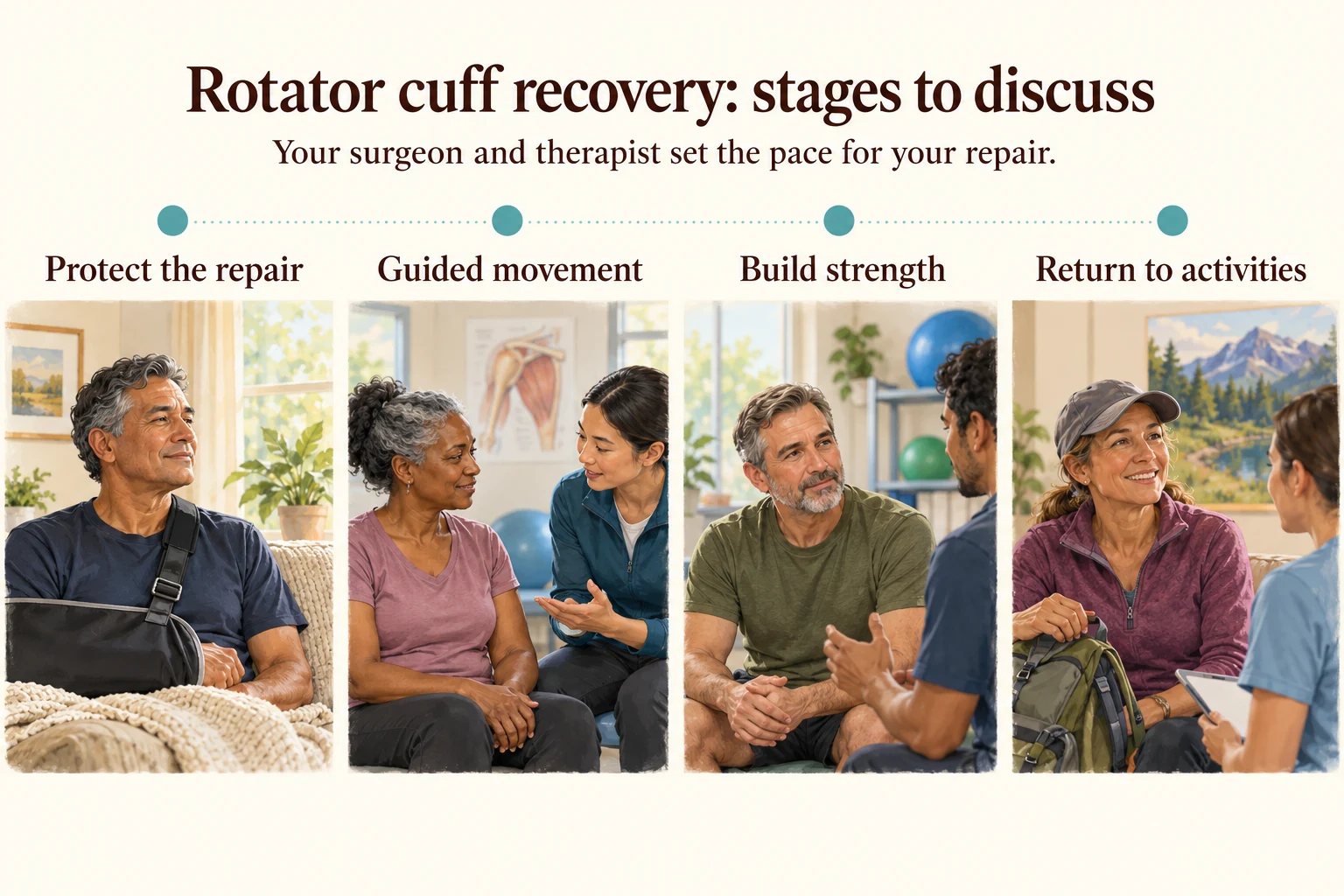
Original educational illustration. Illustrated scenes show protecting a repair, guided movement, strength planning and return-to-activity discussion.
Your surgeon and therapist set the pace for the particular repair. The sequence does not prescribe exercises, weights or dates. The people shown are fictional illustrations.
Illustration references: Reference 1 · Reference 2
1. Know what was repaired
Ask which tendon or tendons were treated, whether the repair was complete and whether other work was performed. A biceps procedure or another shoulder repair can add instructions. The size and quality of the tissue matter more than the size of the skin incisions. Request the operation summary and confirm that the therapist receives it. Your recovery plan should describe the shoulder that was actually treated, including any finding that changed the surgeon's plan during the operation.
2. Manage the protection phase safely
Clarify how the sling is used, when it can be removed and which ordinary tasks require help. Ask about dressing, bathing, sleep and using the hand for permitted activities. The aim is to protect healing tissue while following the movement plan prescribed for you. Do not use pain alone to decide whether lifting or reaching is safe. If you rely on the arm for a walking aid or caregiving, discuss an alternative before surgery.
3. Understand permitted assisted movement
Protocols may include movement performed or assisted in specific ways before independent lifting of the arm is allowed. Ask your clinician to demonstrate the difference and explain who should supervise it. A printed diagram is useful only if you know which movement applies at your stage. Tell the therapist if the instructions are confusing or painful. Do not add stretches from another patient's program; a different tear or additional procedure may require different protection.
4. Know the criteria for active motion
Ask what needs to be true before you move the shoulder through the next stage using its own muscles. The clinician may consider healing time, symptoms, movement quality and the operation performed. This is a change in demand, not simply a date arriving on a calendar. If you compensate by hiking the shoulder or cannot control the movement, let the therapist assess it. Getting the arm higher by any method is not always the same as achieving the intended milestone.
Sources: Management of Rotator Cuff Injuries: Evidence-Based Clinical Practice Guideline
5. Build strength only when it is appropriate
Ask when resistance can be introduced and how the therapist will choose and progress it. Lifting a weight, pushing open a heavy door and carrying groceries all create demand, even if only one looks like exercise. Describe the loads you encounter at home and work. Do not accelerate because the shoulder feels quiet at rest. A clear plan explains what is allowed, what remains protected and which response should lead to an adjustment.
6. Translate progress into daily tasks
Choose activities that matter to you, such as washing your hair, preparing a meal or reaching a work shelf. Ask how each will be reconsidered and whether an adaptation is useful in the meantime. Return to desk work and return to repeated overhead lifting are different decisions. Tell the team about fatigue, sleep and transportation barriers too. Those practical details can determine whether a technically sound rehabilitation plan is manageable across a normal week.
7. Make driving and sport separate decisions
Ask what functional ability, medicine effects and restrictions must be considered before driving. For sport, discuss the actual demands, from a gentle swing to forceful throwing or contact. Neither clearance should be inferred simply from leaving the sling. Request a phased plan and identify who makes the final decision. Confidence matters, but confidence without the required strength or control is not enough. Conversely, persistent fear deserves a conversation rather than pressure to resume at a fixed date.
8. Agree on the response to a setback
Know how to report a fall, sudden loss of function, unexpected wound change or a meaningful increase in symptoms. Seek urgent care for emergency symptoms rather than waiting for a routine message. For a slower plateau, ask when the surgeon and therapist should reassess the plan. Bring the operation summary and the therapist's observations to our shoulder consultation so the discussion can address the specific stage of your recovery. Keep the focus on your clinical findings and the daily abilities you are working toward.
Sources: Management of Rotator Cuff Injuries: Evidence-Based Clinical Practice Guideline
Make the most of your visit
Questions to bring to your consultation
Choose the questions that matter most to you. Bring them along, and ask us to explain anything that is unclear.
- Which tendons and additional structures were treated?
- What does protection mean for everyday tasks?
- Which assisted movements apply now?
- What criteria allow active motion and strengthening?
- How will work tasks be reintroduced?
- What is required before driving?
- How will readiness for sport be assessed?
- Which setback should prompt an earlier review?
Sources & further reading
- Rotator Cuff Tears: Surgical Treatment OptionsAmerican Academy of Orthopaedic Surgeons
- Management of Rotator Cuff Injuries: Evidence-Based Clinical Practice GuidelineAmerican Academy of Orthopaedic Surgeons · Published August 18, 2025
We use these medical sources to help explain your options and prepare you for a conversation with our team. Our guides feature our own clinicians; patient reviews describe individual experiences.