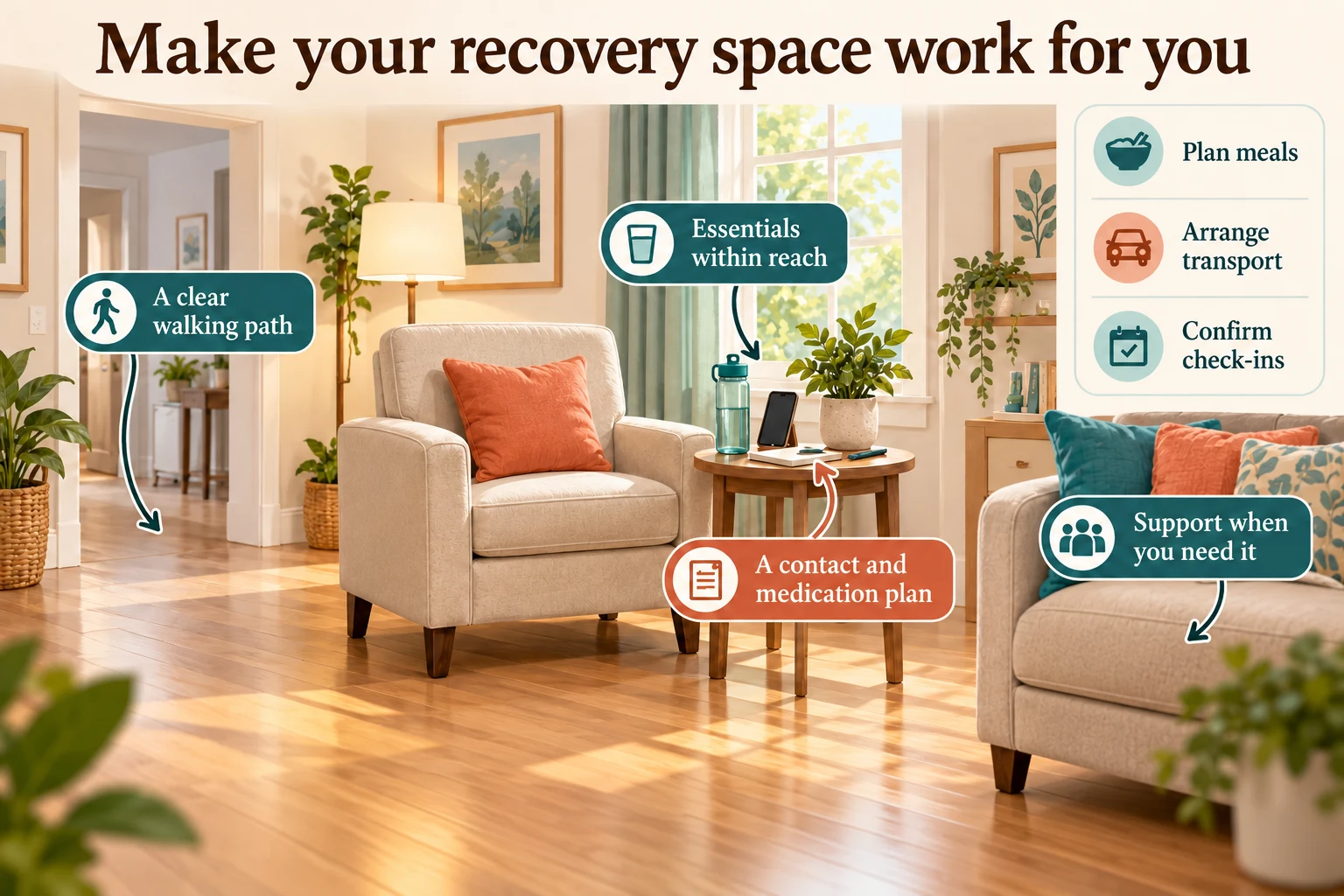
Original educational illustration. An illustrated living area shows a clear walking path, firm chair, nearby phone, water and written plan.
Arrange meals, transport and check-ins. Keep essentials within reach and agree on a contact and medication plan. The room is an illustration; a discharge assessment must consider your own mobility, restrictions and available support.
Illustration references: Reference 1 · Reference 2
1. Describe what being alone means in your home
Tell the team whether anyone can stay, visit, drive or respond quickly if needed. A neighbor who can check in differs from a person available for hands-on assistance. Describe stairs, bathroom access and how far you are from help. Do not minimize the situation because you worry it will complicate scheduling. The information helps the team assess discharge planning and identify problems that need solving before the operation, while there is time to arrange support.
2. Clarify required supervision after anesthesia
Ask the facility about transport and the period during which a responsible adult must remain available. A rideshare trip is not necessarily an acceptable substitute for the required escort or support. Get the requirements in writing and confirm that your proposed arrangement meets them. If it does not, tell the team early. The answer may involve a different plan or additional arrangements, but it should not depend on you improvising after sedation or leaving with an unsafe assumption.
3. Map the tasks affected by restrictions
Walking with an aid, protecting a shoulder and limiting bending create different practical problems. Ask how you will manage dressing, toileting, meals, medicines and getting in or out of bed under the exact instructions for your procedure. Have the appropriate professional teach necessary techniques. Identify what you can do independently and what genuinely requires help. The plan becomes more useful when it describes tasks rather than relying on a broad statement that you should be able to manage.
4. Build a support schedule with named responsibilities
Ask friends, family or paid helpers about specific tasks and times. Someone may be able to bring meals but not assist with transfers; another may provide transport but only on certain days. Confirm availability and make a backup plan if that person becomes ill or cannot come. Share the current instructions with helpers when you want them involved. Avoid giving a vague role to several people and assuming the essential jobs will be covered automatically.
5. Discuss professional services without assuming coverage
Ask whether home health, therapy, equipment or another service is clinically appropriate and who arranges it. Availability, eligibility and insurance coverage vary, and a recommendation is not the same as a confirmed appointment. Request the name of the organization, start date and contact route once arrangements are made. Clarify what the service actually includes; an intermittent clinical visit does not necessarily provide continuous help with daily living. Confirm costs before relying on a service as your main support.
6. Prepare food, supplies and communication
Place frequently used items where you can reach them within your restrictions. Arrange groceries, prescribed medicines and any approved equipment before the day you need them. Keep your phone charged and contacts easy to find. Ask a trusted person to check in at agreed times, while recognizing that a check-in does not replace required supervision. If you have pets or dependents, arrange their care separately so you are not forced into unsafe lifting or hurried movement.
7. Know what happens if home is not workable
Ask who reassesses the plan if your mobility, symptoms or support needs differ from expectations. Discuss possible alternatives before surgery, including what would require a longer stay or a different discharge arrangement. Do not assume that any particular facility or service is guaranteed. The decision should follow your clinical and practical needs. A backup plan is especially useful if the operation is intended as an outpatient procedure and transport or support has been arranged around a short stay.
8. Keep control of the plan while accepting help
Decide what information you want shared with each helper and who can receive updates. You can ask for practical assistance without giving up your role in decisions. Tell our team about any barrier that could keep you from following instructions, including cost, privacy concerns or reluctance to ask others. A good preparation discussion should leave you with a feasible sequence, responsible contacts and an agreed way to request reassessment if the plan stops working.
Make the most of your visit
Questions to bring to your consultation
Choose the questions that matter most to you. Bring them along, and ask us to explain anything that is unclear.
- What supervision is required after my anesthesia?
- Which daily tasks will need help under my restrictions?
- Does my home layout change discharge planning?
- Which professional services are appropriate and actually arranged?
- What does my insurance cover, and what remains uncertain?
- What is the backup if my helper becomes unavailable?
- Who reassesses whether home remains a suitable setting?
- How can I authorize updates while keeping my preferences clear?
Sources & further reading
- AAOS — Preparing for Joint Replacement SurgeryAmerican Academy of Orthopaedic Surgeons
- Hospital for Special Surgery — Traveling for CareHospital for Special Surgery
We use these medical sources to help explain your options and prepare you for a conversation with our team. Our guides feature our own clinicians; patient reviews describe individual experiences.