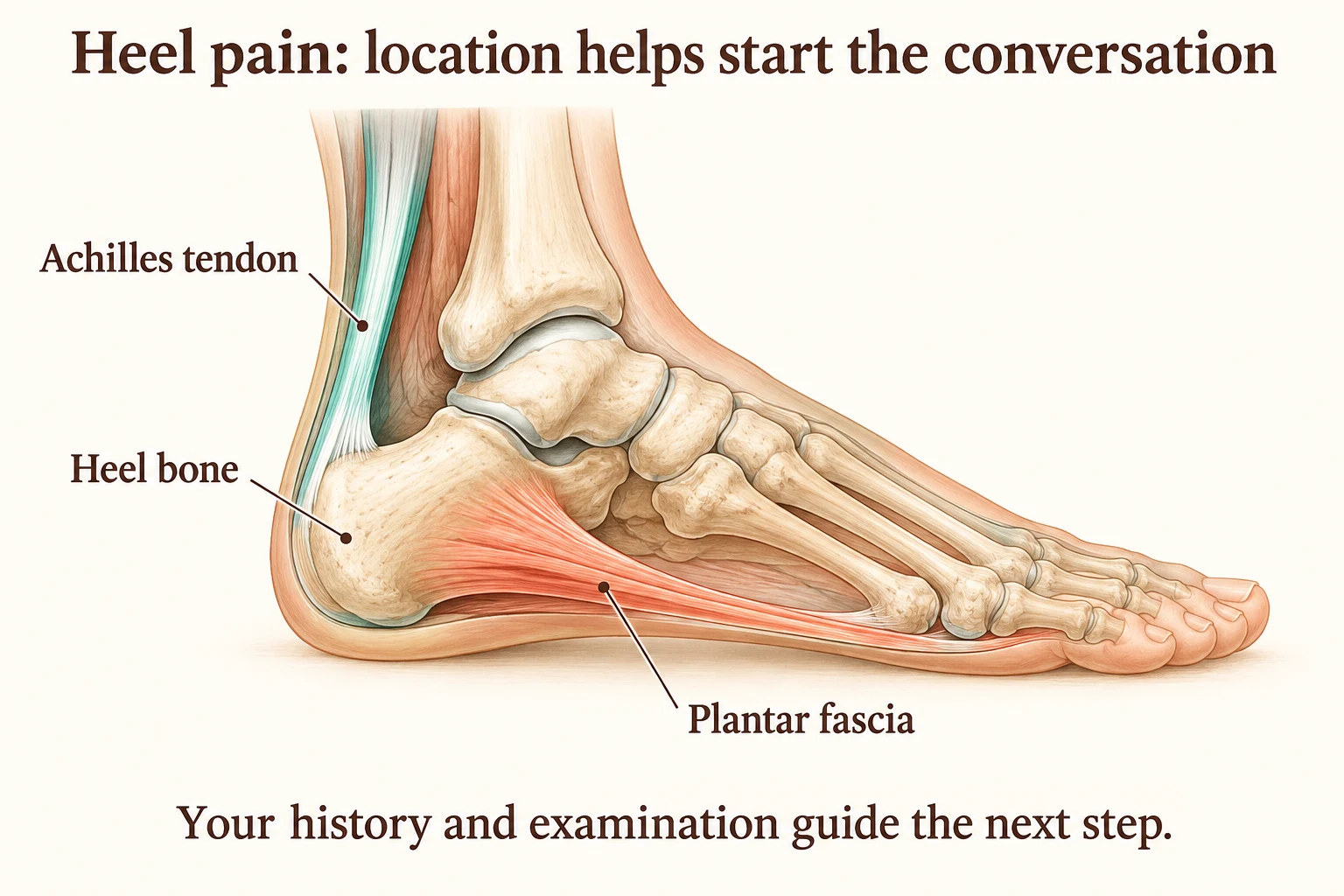
Original educational illustration. A side-view foot schematic labels the Achilles tendon behind the heel, the heel bone and the plantar fascia beneath the foot.
Location helps start the conversation, but the history and examination guide the assessment. The drawing distinguishes structures; it is not a way to diagnose heel pain on your own.
Illustration references: Reference 1 · Reference 2
1. Does the diagnosis fit the pain pattern?
Tell the clinician where the pain is, when it is worst, and whether it changes with the first steps, prolonged standing, or activity. Plantar fasciitis is one explanation for heel pain, but the location alone is not a diagnosis. Mention numbness, a recent injury, or a change in training. Ask what the examination supports and what other causes need consideration. If the symptom pattern has changed since an earlier assessment, explain that before assuming the old diagnosis still accounts for everything.
Sources: Plantar Fasciitis
2. What has already been tried properly?
Bring a list of footwear changes, inserts, therapy, medications, and previous injections, including what helped and for how long. A treatment that was impossible to follow is different from one completed without benefit. Explain whether work or caregiving keeps you on your feet. Ask which part of the existing plan deserves another look before moving to a procedure. The discussion should build on your actual experience rather than restarting a generic checklist of things you have already tried.
Sources: Plantar Fasciitis
3. Which daily load can realistically change?
Describe the surfaces, shoes, standing time, and walking demands of a typical day. Ask what modification is appropriate and feasible for your diagnosis. The answer may need to account for a job where sitting is not an option or a household where you cannot stop carrying out essential tasks. A written work or activity plan can make the recommendation more usable. Avoid assuming that either complete inactivity or pushing through every painful step is the right response without an individualized discussion.
Sources: Plantar Fasciitis
4. What would rehabilitation aim to improve?
Ask the clinician or therapist to explain the purpose of the proposed program and how it connects to your painful activity. Clarify which symptoms are acceptable during the prescribed work and which should prompt reassessment. This is a reason to receive instruction, not to select a stretching routine solely because it is popular online. Choose a practical progress measure, such as tolerance of an agreed walking or standing task. Review that measure alongside the symptom pattern instead of judging treatment on one unusually difficult morning.
Sources: Plantar Fasciitis
5. What benefit should an injection provide?
Ask which substance would be injected, where it would be placed, and why that approach fits your problem. A plantar fascia steroid injection is intended to address symptoms; it is not a promise to correct every cause of heel pain. Discuss the expected duration of benefit and the possibility of little improvement. If a previous injection helped briefly, explain the sequence carefully. The next decision should consider what that response taught the clinician rather than treating repeated injections as an automatic next step.
Sources: Plantar Fascia Injection
6. Which injection risks matter in this location?
Ask specifically about plantar fascia injury, changes to the heel's cushioning tissues, infection, and any personal medication or health issues that affect the decision. The team should explain the relevance of these risks to the proposed injection. Clarify aftercare and whom to contact for an unexpected reaction. Do not stop prescribed medicines on your own to prepare. If image guidance is discussed, ask what it adds for this target while remembering that accurate placement and a worthwhile treatment effect are different questions.
Sources: Plantar Fascia Injection
7. What would justify a procedure?
If surgery or another procedure is proposed, ask what persistent finding makes it reasonable and what alternatives remain. Discuss the exact intervention, its intended benefit, and the recovery restrictions. The phrase minimally invasive does not tell you what structures are affected or when ordinary standing will be possible. Ask what may remain painful afterward and how that would be assessed. Consider a second opinion when the decision is elective and the reasoning is still unclear. You should understand the problem the procedure is intended to solve.
Sources: Plantar Fasciitis · Plantar Fascia Injection
8. How will we make the next decision?
Agree on a review point, the activity you will track, and the changes that warrant earlier contact. Bring your real response, including any cost, equipment, or attendance barrier. If pain persists, ask whether the diagnosis, treatment fit, or practical delivery needs reconsideration. A useful follow-up does more than label the first plan a success or failure. It identifies what has changed and what the next option adds. Keep the plan specific to your heel problem rather than borrowing a timeline from someone else's recovery.
Sources: Plantar Fasciitis · Plantar Fascia Injection
Make the most of your visit
Questions to bring to your consultation
Choose the questions that matter most to you. Bring them along, and ask us to explain anything that is unclear.
- What findings support plantar fasciitis rather than another heel problem?
- Which part of my previous treatment deserves reassessment?
- What activity modification can fit my workday?
- What function should rehabilitation improve?
- What is the realistic purpose of the proposed injection?
- Which tissue risks should I understand before injection?
- What finding would justify a procedure?
- When will we review the response and decide what comes next?
Sources & further reading
- Plantar FasciitisAmerican Orthopaedic Foot & Ankle Society (AOFAS / FootCareMD)
- Plantar Fascia InjectionAmerican Orthopaedic Foot & Ankle Society (AOFAS / FootCareMD)
We use these medical sources to help explain your options and prepare you for a conversation with our team. Our guides feature our own clinicians; patient reviews describe individual experiences.